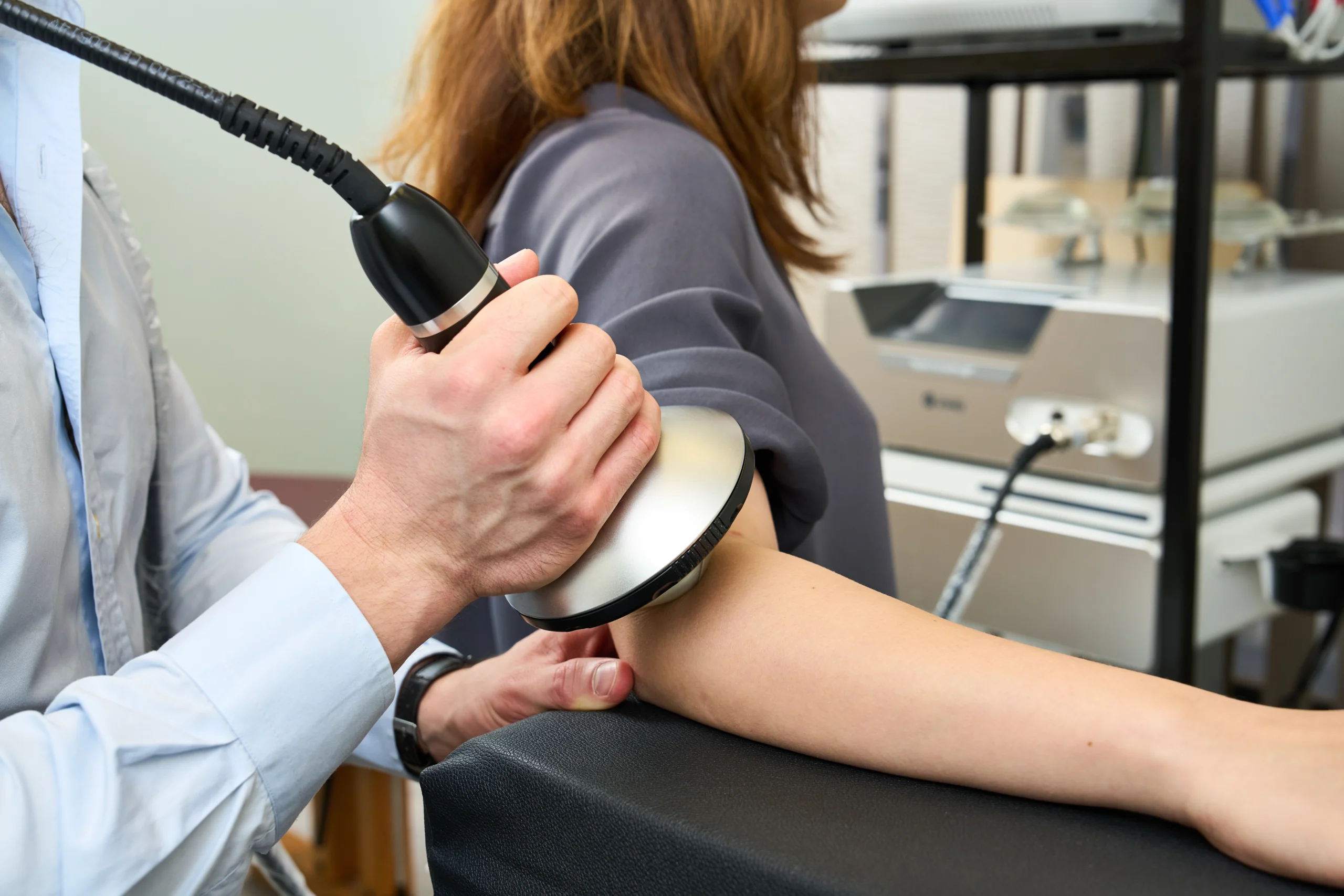
Shockwave Therapy

衝擊波治療

Extracorporeal shockwave therapy (ESWT) is a non-invasive treatment that is commonly used in evidence-based musculoskeletal care for certain tendon- and pain-related conditions. It uses acoustic pressure waves applied to targeted tissues to support pain reduction and tissue healing.

What is shockwave therapy?

Shockwave therapy is a non-invasive treatment commonly used in evidence-based musculoskeletal care, particularly for persistent tendon-related pain. It involves the application of controlled acoustic pressure waves to a targeted area of tissue using an external device. These waves are mechanical in nature and are delivered directly through the skin without injections or surgery.
In clinical practice, shockwave therapy is most often considered for conditions that have not responded sufficiently to exercise-based rehabilitation and other conservative treatments. It is typically used as part of a broader care plan rather than as a standalone treatment.
Agape Extracorporeal Shockwave Therapy

What does shockwave therapy do?

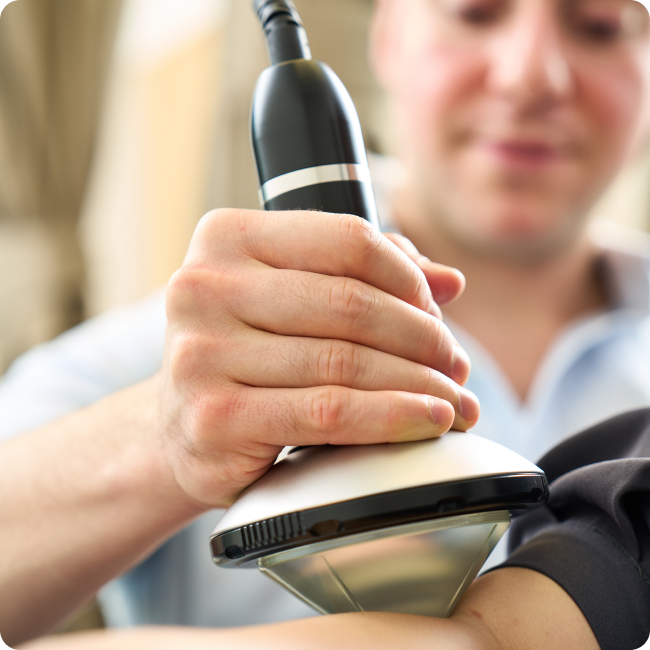
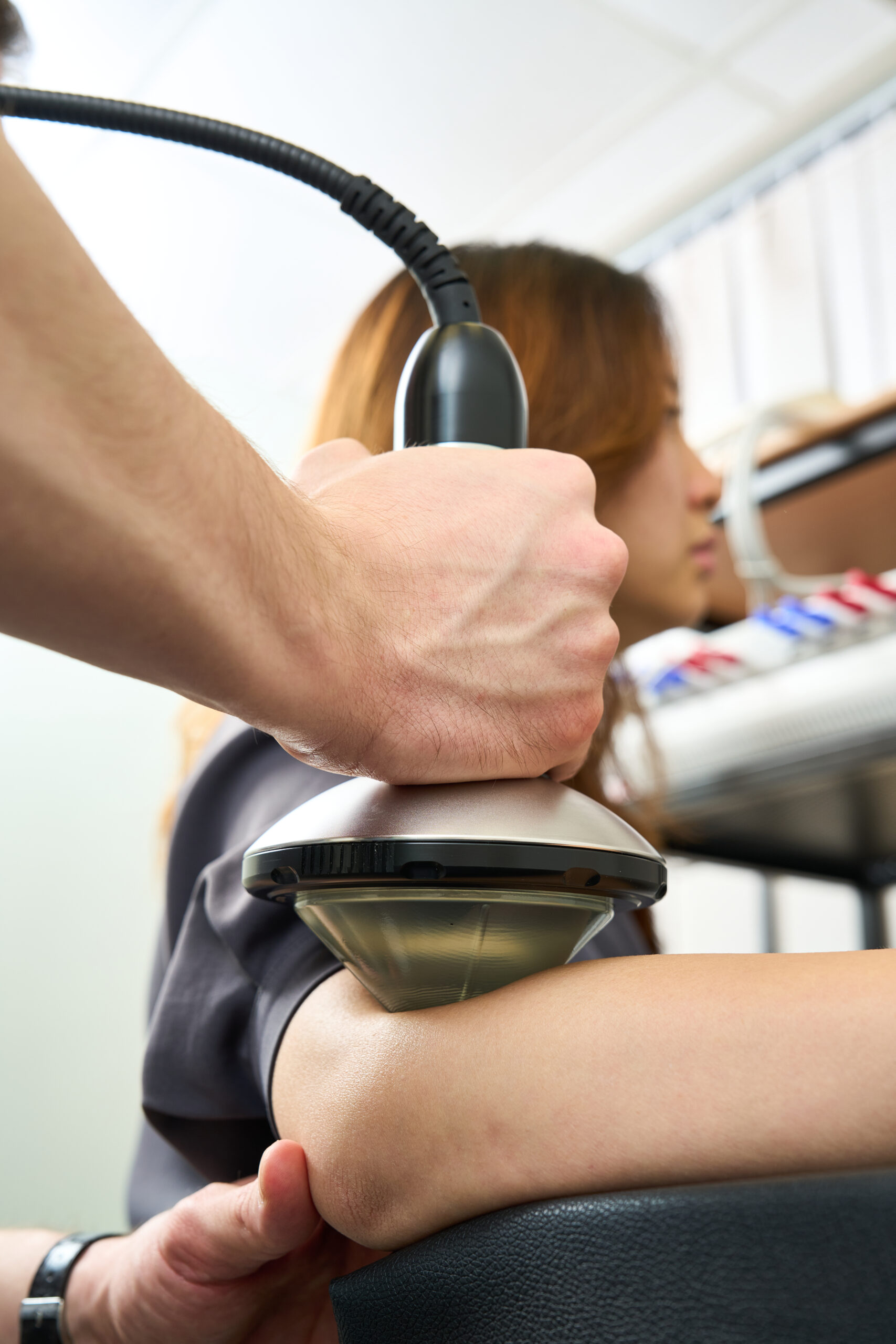
Shockwave therapy is commonly provided by trained healthcare professionals, including chiropractors. In our clinic, treatment is delivered using Focused Shockwave Therapy (FSWT) exclusively. FSWT applies acoustic pressure waves to a specific, targeted area of tissue using a handheld device placed on the skin.The purpose of shockwave therapy is to help reduce pain and support tissue recovery in selected musculoskeletal conditions. Focused shockwave therapy allows for precise delivery of energy to deeper structures, making it suitable for certain chronic tendon-related conditions. Treatment is adjusted based on clinical assessment and patient tolerance and is integrated into a broader, active care plan.

Injuries Treated with Shockwave Therapy

Foot pain

Commonly used for plantar fasciitis and other heel-related tendon conditions.

Knee and leg pain

May be used for patellar tendinopathy and medial tibial stress symptoms.

Shoulder pain

Used in some rotator cuff–related shoulder pain and lateral elbow tendinopathy.

Hip and thigh pain

Can be applied for greater trochanteric pain syndrome and certain hamstring tendinopathies.

Other conditions

May be considered for selected chronic tendon or soft-tissue conditions as part of a comprehensive care plan.

What not to do after shockwave therapy?

What to do after shockwave therapy?

Most people can resume normal daily activities immediately following treatment. However, it is generally recommended to avoid strenuous or pain-provoking activities for up to 48 hours. High-impact activities such as running may need to be temporarily limited if you are being treated for plantar fasciitis. Your chiropractor will provide individualized guidance based on your condition.

When to use shockwave therapy?

Shockwave therapy is typically considered when symptoms persist despite appropriate conservative care such as exercise therapy, load management, and activity modification.

What does shockwave therapy feel like?

Shockwave therapy is often described as rapid tapping or pulsing sensations at the treatment site. Some discomfort may be experienced, particularly in sensitive tissues, but treatment intensity can usually be adjusted. Sessions typically last 5–15 minutes.

How many sessions of shockwave therapy?

Most people require between 3 and 5 sessions of shockwave therapy. A Chiropractor 香港 may recommend weekly sessions depending on the condition, symptom response, and overall care plan.

How does shockwave therapy work?

Shockwave therapy works by applying acoustic pressure waves that mechanically stimulate targeted tissues. Evidence suggests this stimulation may influence pain modulation, local circulation, and cellular activity related to tissue adaptation. Shockwave therapy does not act as a passive cure and is most effective when combined with active rehabilitation strategies.

Who can perform shockwave therapy?

Shockwave therapy can be performed by appropriately trained and licensed medical professionals, including chiropractors and physiotherapists, when used within their scope of practice.

How long does shockwave therapy last?

Each session usually lasts between 5 and 15 minutes. Although sessions are short, tissue responses may continue for several weeks following treatment.

How often should you do shockwave therapy?

Shockwave therapy is commonly performed once per week for 3–6 weeks, depending on clinical response.

Where can I get shockwave therapy?

Shockwave therapy is available at specialized rehabilitation and chiropractic clinics. Agape Chiropractic Hong Kong offers shockwave therapy as part of an evidence-based approach focused on pain reduction and functional recovery.

FAQs

How long does shockwave therapy take to work?
Some patients notice improvement after the first few sessions, while others experience more gradual change over several weeks. Improvements may continue for 4–6 weeks after completing treatment.
What to expect after shockwave therapy?
Temporary soreness, redness, or tenderness can occur and usually resolves within a few days. Many patients later report reduced pain and improved movement.
How does shockwave therapy help plantar fasciitis?
Shockwave therapy may be used for plantar fasciitis that has not improved with exercise and load management alone. Treatment is combined with rehabilitation exercises, footwear advice, and activity modification.
How effective is shockwave therapy?
Shockwave therapy can be effective for selected chronic musculoskeletal conditions, particularly tendon-related pain, when used as part of evidence-based care.

Book Your Shockwave Therapy Today with Us

At Agape Chiropractic Hong Kong, shockwave therapy is integrated into personalized, evidence-based musculoskeletal care plans to help patients reduce pain and restore function.

Can I use pain relievers (Ibuprofen/NSAIDs) after treatment?

We generally recommend avoiding anti-inflammatory medication (like Ibuprofen) for 24–48 hours after Shockwave, where possible. The treatment is thought to stimulate a local healing response, and anti-inflammatories may potentially reduce this effect. If pain relief is needed, Paracetamol (Tylenol) is usually considered a suitable alternative. However, recommendations should always be guided by your individual health needs and discussed with your clinician.

Why do I need 3–5 sessions if I feel better after the first one?

The first session may provide an early reduction in pain, sometimes described as an “analgesic” effect. However, the underlying tissue adaptation and remodeling processes take time. Completing the recommended course of care helps support more consistent and longer-term improvement, although the exact number of sessions may vary depending on your condition, response to treatment, and overall rehabilitation plan.

What to Expect from Focused Shockwave Therapy (FSWT)

The "FSWT" Advantage

Radial shockwave stays on the surface; Focused goes deep into the tendon. Unlike common radial shockwaves, our Focused Shockwave (FSWT) is designed to target deeper tissues more precisely. This allows energy to be delivered to the affected area while minimizing unnecessary irritation to surrounding tissues, although the most suitable type of shockwave depends on the specific condition being treated.

Is it Painful?

For Shockwave, the #1 fear is pain. People hear the word “shock” and get nervous. Despite the name, there is no actual electricity involved—these are acoustic sound waves. We always start at a low intensity to allow your body to gradually adapt, and we adjust the settings in real-time based on your feedback to keep the treatment tolerable. You are always in control throughout the session.
Frame
Hong Kong Central Chiropractor