- 2777 3377
- Unit A, 8/F, World Trust Tower, 50 Stanley Street, Central
- Unit A, 8/F, World Trust Tower, 50 Stanley Street, Central

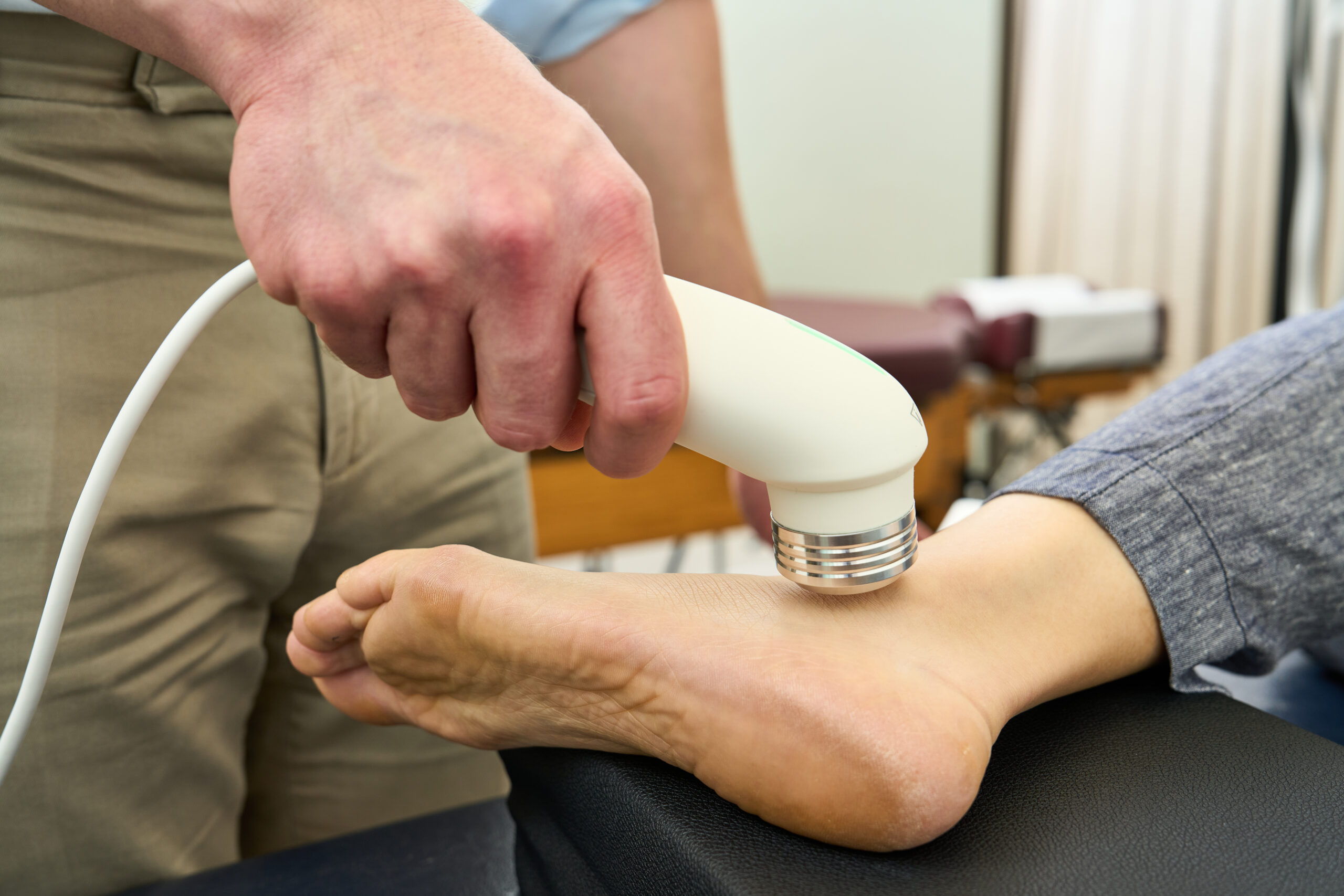
Many people associate ultrasound primarily with pregnancy, where it is commonly used to visualize fetal development. It is undoubtedly an impressive and valuable medical imaging tool. However, fewer people are aware that similar ultrasound technology can also be used in rehabilitation and musculoskeletal care settings. If you are experiencing chronic pain, soft tissue discomfort, or restricted movement, ultrasound therapy may be used as an adjunct modality within a broader chiropractic treatment plan to help manage symptoms and support recovery.
While diagnostic ultrasound focuses on imaging, therapeutic ultrasound is applied differently, with the aim of influencing tissues rather than producing images. When appropriately selected, it may assist with short-term pain relief, tissue relaxation, and improved movement when combined with active care strategies.
Chiropractic ultrasound therapy may offer potential benefits for some individuals as part of a comprehensive management approach. Chiropractors may use diagnostic ultrasound imaging in certain clinical settings to help visualize structures such as tendons, muscles, joints, ligaments, vessels, and surrounding soft tissues. This form of ultrasound assists with assessment and clinical decision-making.
Therapeutic ultrasound, however, is a separate application and is not intended for diagnostic imaging. Instead, it uses modified ultrasound settings to interact with muscles, tendons, connective tissues, and periarticular structures. It is typically used as an adjunctive therapy, meaning it supports—but does not replace—manual treatment, exercise-based rehabilitation, and patient education.
There are two primary categories of therapeutic ultrasound, both of which involve sound waves penetrating through the skin and into underlying soft tissues.
Thermal ultrasound delivers continuous sound waves that generate gentle tissue heating. This approach is more commonly used in subacute or chronic conditions, where the goal may be to temporarily increase tissue extensibility, reduce muscle tension, or support short-term pain relief.
Mechanical ultrasound, sometimes referred to as pulsed ultrasound, delivers intermittent sound waves rather than continuous energy. This approach is more often used during acute or early-stage conditions, where the intention is to influence cellular processes and fluid movement rather than to generate heat.
Ultrasound therapy is delivered using a handheld applicator. HK Chiropractors apply a conductive gel either to the applicator head or directly to the area being treated. This gel is essential, as it reduces air interference and allows sound waves to be transmitted efficiently into the tissues.
Once the gel is applied, the chiropractor gently moves the applicator in slow, controlled circular or linear motions over the targeted area. This ensures even energy distribution and minimizes excessive tissue exposure in one location. Each treatment session typically lasts between 5 and 10 minutes, depending on the area being treated and the clinical objective.
When delivered by a licensed professional, ultrasound therapy is generally well tolerated and considered safe. The treatment should not be painful. Some individuals may experience a mild warming sensation or slight local discomfort, while others may feel very little at all.
At a microscopic level, ultrasound waves produce mechanical vibrations within the tissues. These vibrations may influence fluid movement and cellular activity. While some patients report sensory changes during treatment, the experience is usually subtle and comfortable.
During ultrasound therapy, a physiological response known as hyperemia may occur. Hyperemia refers to a temporary increase in local blood flow, often associated with mild tissue heating. This increase in circulation may support short-term symptom relief and tissue relaxation, although it is not a direct treatment for underlying pathology.
Common conditions where ultrasound therapy may be used as an adjunct include:
Some clinical studies suggest that ultrasound therapy applied to the wrist may provide short-term symptom relief for individuals with carpal tunnel syndrome. The effects are typically modest and temporary, and ultrasound therapy is most appropriately used alongside activity modification, exercise, ergonomic adjustments, and other evidence-based interventions.
In conditions such as adhesive capsulitis (frozen shoulder), rotator cuff–related pain, and subacromial bursitis, ultrasound therapy may contribute to temporary pain reduction. Best results are typically achieved when ultrasound is combined with manual therapy and structured exercise rehabilitation.
Ultrasound therapy may provide short-term symptomatic relief in the surrounding muscles and soft tissues associated with sciatica. It may temporarily increase local blood flow and reduce muscle tension, although it does not directly address nerve compression. For more information on how to treat sciatica, you can read our previous blog discussing chiropractic management strategies.
Lower back pain may be managed using therapeutic ultrasound as an adjunct modality. While it may contribute to temporary pain relief, strong clinical evidence supports active care approaches such as exercise, education, and graded movement as primary treatment strategies.
Therapeutic ultrasound has been incorporated into various stages of Achilles tendon rehabilitation. However, progressive loading and strengthening exercises remain the most critical component of successful tendon recovery.
High-frequency sound waves may generate mild heating effects that can temporarily reduce pain and improve tissue flexibility. Ultrasound therapy is sometimes used during subacute or chronic tendon conditions, alongside exercise-based interventions.
Ultrasound therapy delivers sound waves that create vibration and gentle heat within tissues. This may temporarily increase tissue extensibility and reduce stiffness, although meaningful functional improvements are dependent on active rehabilitation and movement retraining.
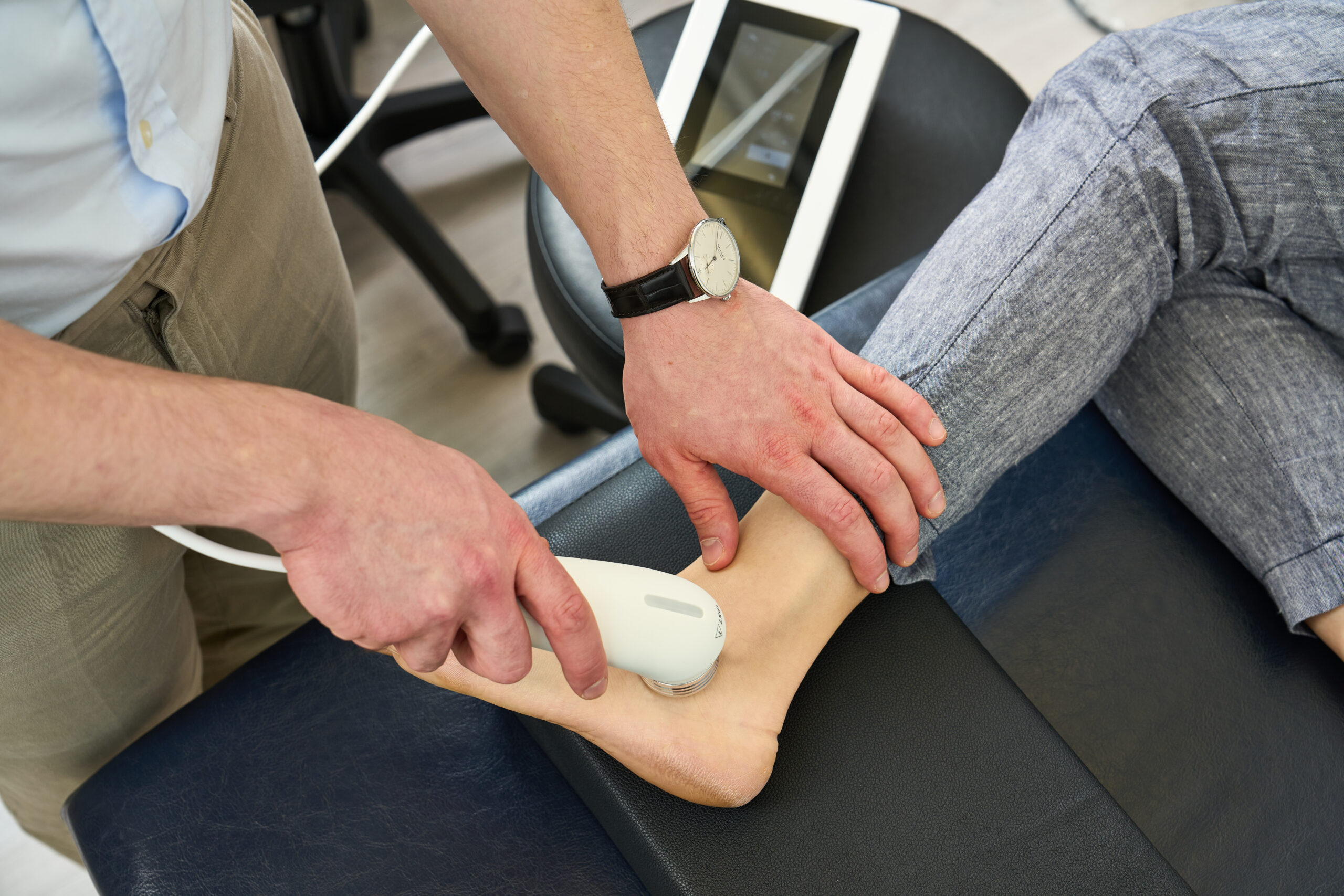
Ultrasound therapy is generally considered safe when administered at clinically appropriate dosages and frequencies. There is no universal rule regarding how often it should be used. Chiropractors determine treatment frequency based on the individual’s condition, stage of healing, response to care, and overall rehabilitation goals.
Some individuals may notice changes after three to four sessions, while others may experience little benefit. If measurable improvement is not observed, alternative evidence-based strategies are typically recommended to ensure optimal outcomes.
Low‑intensity ultrasound therapy has demonstrated potential anti‑inflammatory properties, particularly in the management of soft tissue injuries. Research suggests that ultrasound may help modulate inflammatory processes, reduce local swelling, and support tissue repair through mechanical and cellular effects. Proposed mechanisms include improved fluid movement, stimulation of tissue healing, and possible upregulation of immunosuppressor cell markers.
However, the overall evidence remains mixed and condition‑dependent. While some studies report reductions in pain and swelling, others show limited or no clinically meaningful anti‑inflammatory effects. For this reason, ultrasound therapy should be viewed as a supportive modality rather than a standalone anti‑inflammatory treatment and is best used as part of a comprehensive, evidence‑informed care plan emphasizing active rehabilitation.
Chiropractic ultrasound therapy is widely regarded as a safe, low‑risk treatment when used appropriately by a licensed professional. It is generally well tolerated by most patients.
Certain precautions are necessary. Therapeutic ultrasound is typically avoided in areas with known blood clots, active infections, malignant tumors, impaired sensation, or significant vascular abnormalities. Your chiropractor will assess suitability before treatment.
A typical therapeutic ultrasound session lasts between 5 and 10 minutes. The procedure does not require anesthesia, and patients can usually return to normal daily activities immediately following treatment.
Following ultrasound therapy, your chiropractor may recommend specific exercises, stretches, or self‑care strategies to enhance treatment effects. Ultrasound therapy does not usually cause downtime and is considered a non‑invasive intervention that does not limit normal movement or activity.
Some people are surprised to learn that chiropractors use ultrasound therapy as part of musculoskeletal care. In clinical practice, it is commonly applied as an adjunct modality, rather than a primary treatment.
To achieve optimal results, therapeutic ultrasound is most effective when combined with manual chiropractic techniques and exercise‑based rehabilitation. Current evidence supports integrating passive modalities with active care approaches. Chiropractic care emphasizes safe, non‑invasive strategies to reduce pain, improve function, and support long‑term health through movement, lifestyle guidance, and patient education.
Chiropractic ultrasound therapy is a safe and non‑invasive option used to support pain management within a broader treatment plan. By using sound waves to generate mild mechanical and thermal effects in tissues, it may provide short‑term symptom relief for conditions such as sciatica, tendon‑related pain, and joint dysfunction.
When combined with manual therapy and exercise‑based rehabilitation, ultrasound therapy may contribute to improved comfort and functional outcomes. At Agape Chiropractic Hong Kong, we provide professional ultrasound therapy as part of individualized, evidence‑informed care. Speak with our team to learn how we may support your recovery and overall musculoskeletal health.
No. Ultrasound therapy should not be painful. Most people feel either nothing or a mild warming sensation in the treated area. Treatment is generally very comfortable.
You may notice gentle warmth or mild vibration under the skin. Some people feel very little sensation, which is completely normal.
The technology is similar, but the purpose is different. Pregnancy ultrasounds are used for imaging, while therapeutic ultrasound aims to interact with tissues rather than create images.
Some people notice short‑term relief after a few sessions, while others do not notice major changes. Ultrasound therapy works best when combined with other treatments.
Ultrasound therapy may have anti‑inflammatory effects in certain soft tissue conditions, but results vary. More research is still needed, and it should not be relied on as a sole treatment.
Yes, when delivered by a licensed professional. Your chiropractor will assess whether ultrasound therapy is appropriate for you.
There is no fixed number of sessions. Frequency depends on your condition, response to care, and treatment goals.
Yes. There is no downtime, and most people resume daily activities immediately.
No. Ultrasound therapy is an adjunct treatment and works best alongside exercise, manual care, and education.
It is generally avoided in areas with infection, tumors, blood clots, impaired sensation, or significant circulation problems.
Exercises address the underlying cause of pain or dysfunction. Ultrasound may help make movement more comfortable in the short term.