- 2777 3377
- Unit A, 8/F, World Trust Tower, 50 Stanley Street, Central
- Unit A, 8/F, World Trust Tower, 50 Stanley Street, Central

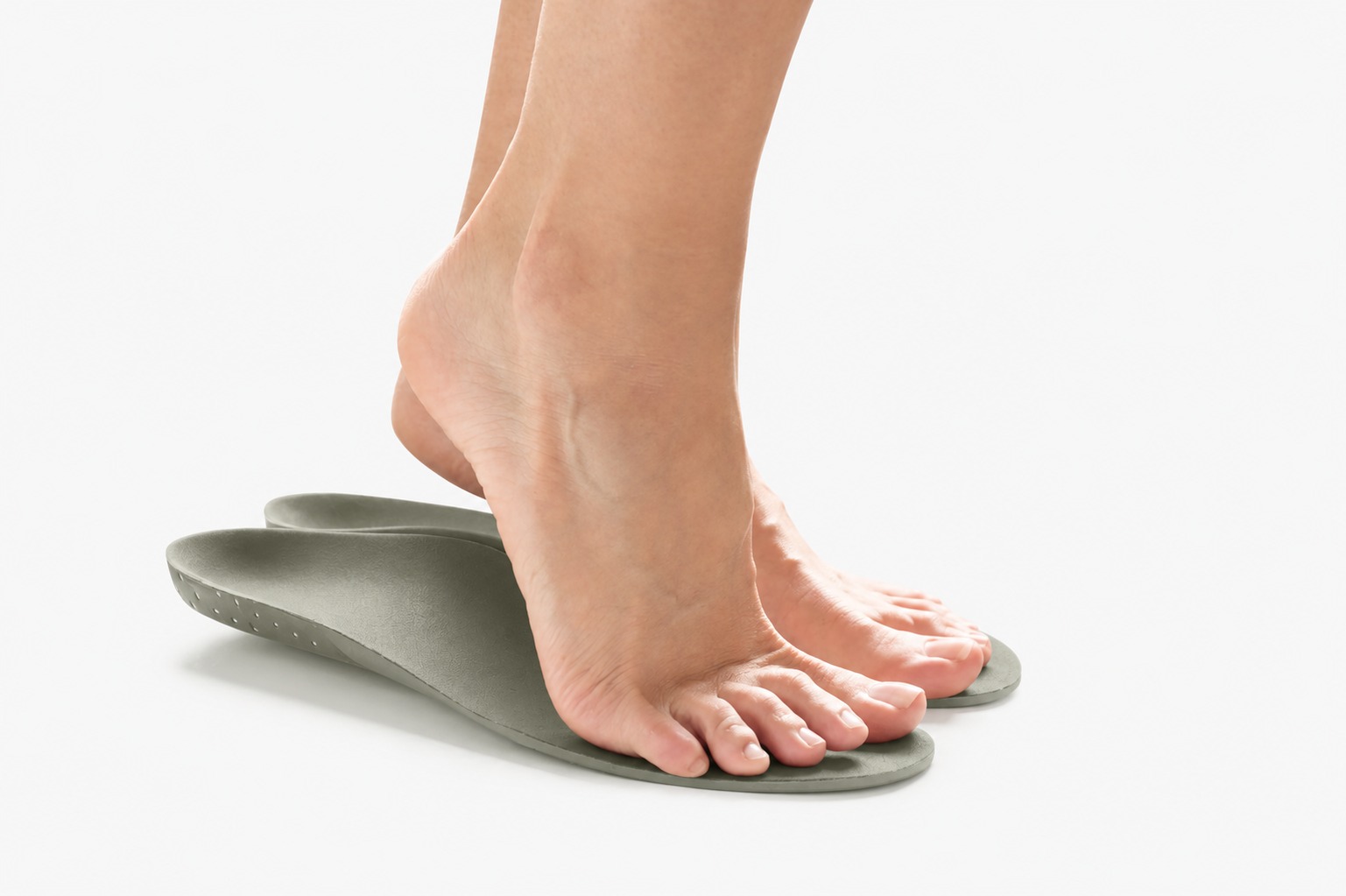
Foot orthoses are devices worn inside footwear that are intended to help influence how forces are distributed through the foot and lower limb. Rather than acting as a simple cushion, a foot orthosis is designed to modify ground reaction forces, support specific anatomical structures, and reduce excessive mechanical stress on tissues. When appropriately prescribed, foot orthoses may help reduce pain in some people. Research on how well they work is mixed, and this page explains where they may and may not help.
In musculoskeletal care, foot orthoses are sometimes used as part of a broader management plan for foot, ankle, knee, hip, and lower back pain. They change how the foot interacts with the ground, which may influence the lower limb during standing, walking, and running. Changes in loading at the foot may alter tissue stress higher up the body, particularly during repetitive daily activities.
Foot orthoses are used by individuals of all ages, including athletes, office workers, and older adults. Their role is not rigid correction, but functional support that adapts to movement demands.
Custom orthotics in Hong Kong (also called custom foot orthoses or custom insoles) are made after an assessment and a model of your foot. They are prescribed by some chiropractors in Hong Kong, alongside other providers. This page explains how foot orthoses work, how they differ from ready-made insoles, how they are used for flat feet and plantar fasciitis, what the research says, side effects, the steps of the process and what affects the cost, so you can decide whether an assessment is right for you. If your foot pain is linked to sport, see our sports injuries page. For heel pain that does not settle, you can also read about shockwave therapy.
This type of medical device may be custom or prefabricated and is designed to interface with the plantar (bottom) surface of the foot. A foot orthosis primarily alters loading patterns by changing the magnitude, direction, and timing of forces that act on the foot during movement.
By shifting pressure away from irritated tissues such as the plantar fascia, metatarsal heads, or posterior tibial tendon, orthotic support may change how the foot moves and may reduce excessive strain on muscles, tendons, and ligaments. This redistribution of load may matter during walking and running, where repetitive forces can accumulate over time.
Importantly, these devices are not intended to permanently change foot posture. Instead, they are intended to manage tissue stress while irritated structures recover. Orthoses are usually combined with exercise, manual therapy, and footwear advice.
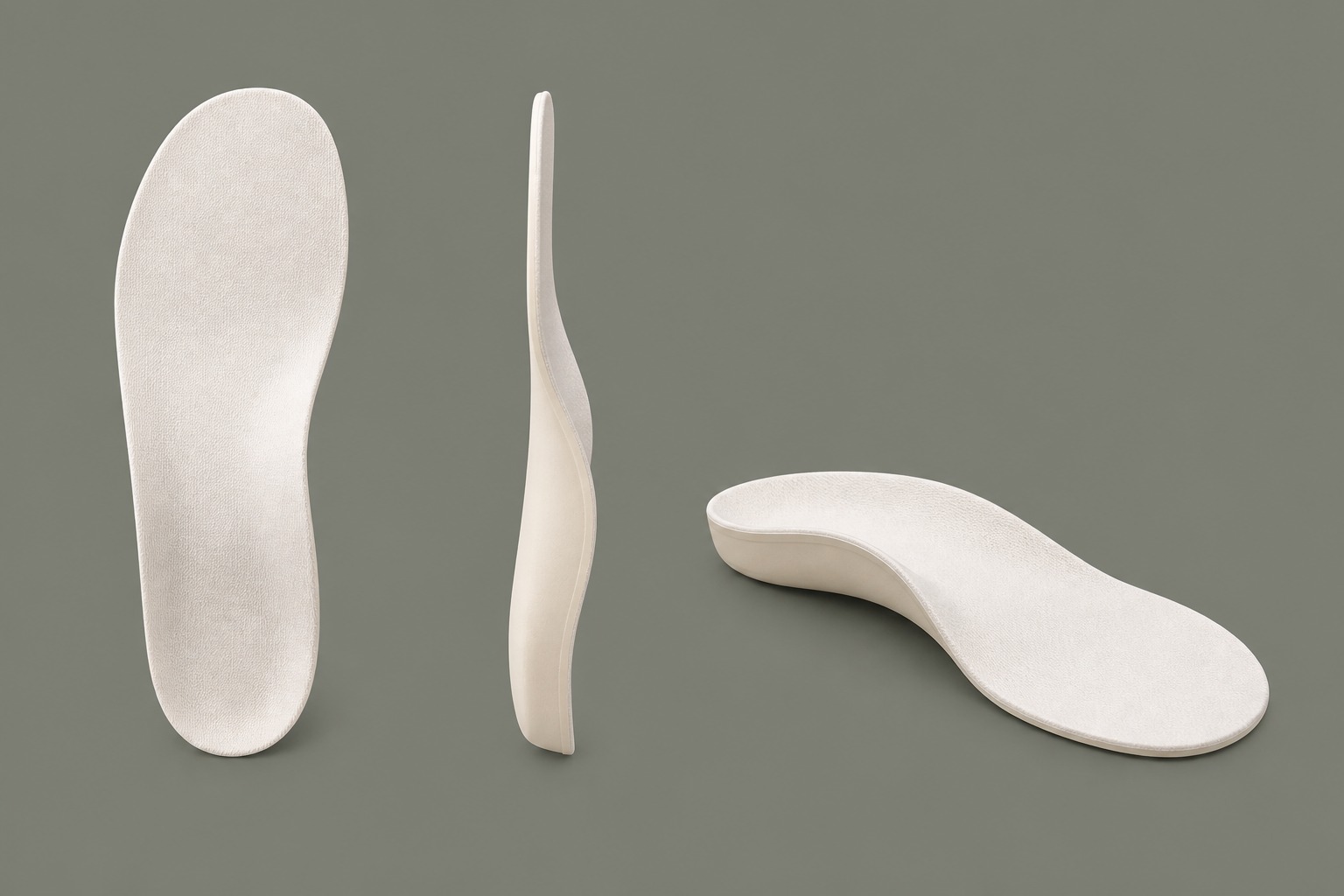
Mostly, yes. “Foot orthosis” (plural “foot orthoses”) is the clinical term, and “orthotics” is the everyday word for the same type of device. “Insoles” is a wider word. It can mean a ready-made insole from a shop, or a custom insole made for one person after an assessment. On this page, “custom orthotics” and “custom insoles” both mean a device made to the shape and needs of your own feet.
Some people tolerate subtle biomechanical imbalances for years before symptoms appear. However, certain clinical and functional indicators suggest that an assessment by a chiropractor could be considered. These signs may develop gradually and can be mistaken for normal discomfort. An assessment can help find contributing factors early. Here are some examples:
Discomfort that continues despite rest, stretching, or appropriate footwear is a reason for evaluation. Persistent foot pain may include heel pain, arch strain, or forefoot discomfort that interferes with daily activities and is worth having assessed. Pain that is worse first thing in the morning, after prolonged standing, or following exercise may indicate excessive tissue loading for which an orthosis may be considered.
The soles of your shoes can give clues about how you load your feet. Unusual shoe wear patterns, such as excessive wear along one edge, may reflect uneven loading or gait mechanics. These patterns may suggest overpronation (the foot rolling inward), reduced shock absorption, or uneven force distribution. Orthotic support may be considered to spread pressure more evenly across the foot.
Repeated sprains may indicate instability or impaired foot control during movement. Orthotic support is sometimes used alongside exercise and load management for repeated ankle sprains, but how much it helps varies from person to person.
Symptoms are not always limited to the foot. Knee, lower back, or hip pain may be influenced by altered foot mechanics and compensatory movement patterns. Small changes at ground contact may alter joint forces throughout the lower limb. How forces are transferred from the ground upward can be looked at as one part of the assessment, particularly for people who stand or walk for long periods. Foot orthoses are not a treatment for these problems on their own. See our low back pain page.
Foot orthoses are commonly classified based on material properties, functional goals, and clinical application. The most suitable type depends on individual movement patterns, activity levels, and symptom presentation.
Produced from firm materials such as carbon fibre or hard plastics, these devices are designed to influence motion and redistribute forces. They are sometimes prescribed when foot mechanics are thought to contribute to symptoms higher up the lower limb or spine.
Designed primarily for cushioning and shock absorption, these are used by people who need extra cushioning, including some people with arthritis, sensitive feet, or long periods of standing.
By combining supportive and cushioning elements, semi‑rigid devices are designed to provide some stability while allowing functional movement. They are used by some active individuals and athletes during higher‑load activities such as running and sport.
Mass‑produced inserts are designed to fit a wide range of foot shapes. A premade foot orthosis may be enough for mild symptoms but is not made for individual biomechanics, asymmetries, or gait patterns.
A custom foot orthosis is made after a clinical assessment and a model of your foot. Customisation allows the stiffness, contour, and pressure areas to be set for the individual.
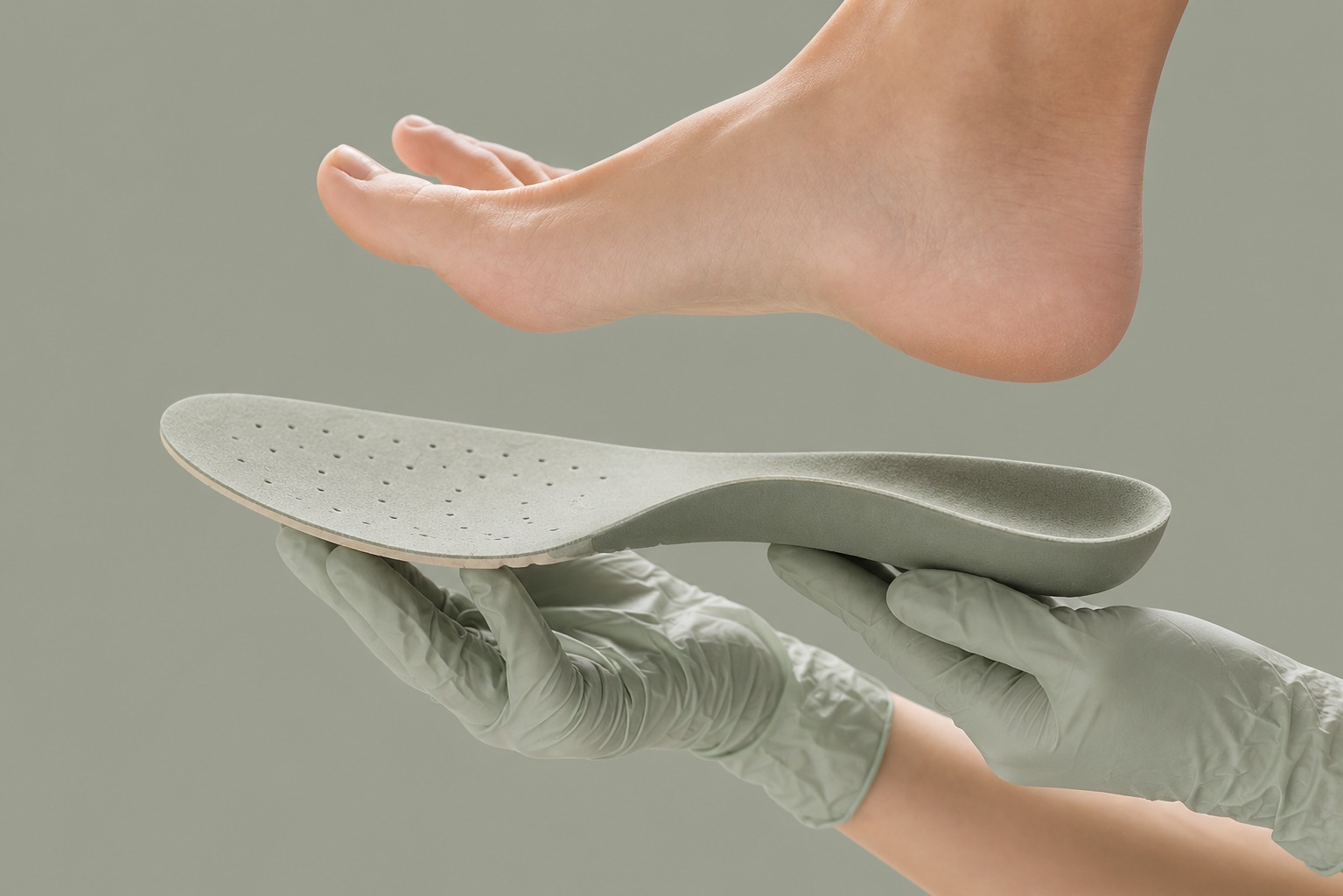
Do custom orthotics work better? For plantar heel pain, a systematic review (Whittaker et al., 2018) found no clear difference between custom-made and ready-made orthoses. A Cochrane review (Hawke et al.) found that custom-made orthoses helped some kinds of foot pain, such as pain linked to a high arch, but not clearly plantar fasciitis. Which type is suitable depends on your condition, and ready-made insoles may be a reasonable first step for mild symptoms.
Our chiropractors collaborate with a Hong Kong orthotics lab that can manufacture custom foot orthoses. You are free to ask about other options, including ready-made insoles, or about being referred to another provider or specialist.
Custom insoles are offered in Hong Kong by different types of provider, including podiatrists, orthotists and some chiropractic and physiotherapy clinics. Before you choose, it helps to ask:
Our chiropractors can provide custom foot orthosis referral at our Unit A, 8/F, World Trust Tower, 50 Stanley Street, Central, as part of a wider care plan.
Flat feet (pes planus) means the arch of the foot is low, or lies flat on the ground when you stand. Many people have flat feet and no pain, and flat feet on their own do not always need treatment. When flat feet are painful, the care plan may start with exercise, footwear advice and changes to activity, and foot orthoses may be added in some cases. Flat feet treatment in Hong Kong starts with an assessment, because the right plan depends on whether the flat feet are painful, flexible or stiff.
A review of foot orthoses for flexible flat feet (Oerlemans et al., 2023) concluded that the combined results reviewed studies suggested that they may reduce pain in adults. Your chiropractor will explain what orthoses may add to your plan, and what the other options are.
A Cochrane review of foot orthoses for children with flat feet (Evans et al., 2022) found the evidence to be weak, and its authors did not find support for expensive custom orthoses in healthy children with painless flat feet. A child’s feet are assessed carefully, and a parent or guardian needs to take full part in decisions about the child’s care.
High arches (pes cavus) can also cause foot pain. A Cochrane review of custom-made foot orthoses (Hawke et al.) found that they reduced pain from painful high arches after 3 months compared with sham orthoses, which was the clearest result of that review, although the evidence overall was limited.
A stiff flat foot, flat feet that appear suddenly after an injury, or a swollen, hot or red foot may be reasons for your chiropractor to refer you to a medical practitioner. Where needed, imaging such as an MRI scan may be discussed.
Plantar fasciitis is a common cause of heel pain, felt under the heel or along the arch of the foot. Orthotics for plantar fasciitis are one of the options sometimes used alongside stretching, strengthening, load management and footwear changes. Research on orthoses for heel pain is mixed (see the research section below), so your chiropractor will talk through the options with you.
If heel pain does not settle, other options may be discussed, such as shockwave therapy or ultrasound therapy. The research on these is also mixed, and each page explains where they may and may not help.
Research on foot orthoses is mixed.
Foot orthoses are therefore one possible part of a wider plan, not a stand-alone treatment. Your chiropractor will talk with you about other options, including exercise, footwear advice, manual care and referral to a medical practitioner where appropriate.
Foot orthoses are usually one part of a plan. Depending on your assessment, the plan may also include:
Foot orthoses can cause side effects in some people. Possible effects include:
Tell your chiropractor if any effect is stronger than expected or does not settle, and the orthosis can be adjusted or stopped. Extra care may be needed with reduced feeling in the feet (for example, with diabetes), poor circulation, open sores or fragile skin. Please tell your chiropractor about these before an orthosis is made. If foot orthoses are not suitable, other options, including referral to a medical practitioner, will be discussed.
Every course of care starts with an assessment. Your chiropractor takes your history, examines your feet and how you walk, and explains the options, the possible risks and the option of no treatment, including the use of ready-made insoles. Treatment only starts with your consent.
Clinical decisions are based on how the entire body functions during movement. A chiropractic approach considers the relationship between foot mechanics, joint loading, and the spine rather than focusing on foot shape alone. In chiropractic care, orthotic prescription forms part of a musculoskeletal assessment, so the device is part of a wider plan rather than being treated as a stand‑alone solution.
Assessment includes evaluation of joint mobility, muscle strength, posture, and symmetry. A full body assessment helps identify contributing factors that influence tissue stress and movement patterns throughout the lower limb and spine.
Careful observation of walking and, when appropriate, running provides useful information. Gait analysis evaluates foot strike, timing, joint coordination, and alignment to determine where loading may be uneven. This information helps refine orthotic design and guides recommendations around activity modification or rehabilitation.
A custom orthosis is made from a model of your foot. A 3D map of your foot is captured using scanning technology so that the finished orthotic can match anatomical and clinical requirements.
Clinical findings guide the design process. Prescriptions for foot orthotics specify material properties, support characteristics, and any additional features required to accommodate asymmetries or sensitive structures. Each prescription is individualised based on clinical goals rather than a one‑size‑fits‑all approach.
Fitting and follow-up appointments check comfort, review how you respond, and allow adjustments. Ongoing review can show whether the orthotics still suit changing activity demands. See what to expect in our Patient Guide.
Adaptation is usually gradual. Your chiropractor will give you a plan for how long to wear them each day, and wear time is usually built up gradually. Mild awareness in the feet or legs can happen during this adjustment phase as tissues adapt to altered loading patterns. If you have pain, blisters or numbness, stop wearing them and contact the clinic.
The cost of custom orthotics in Hong Kong depends on the assessment, the type of device, and the materials. Your chiropractor explains the fees for the assessment and for the device before you decide on treatment, and you can ask for a quotation in advance. If you have questions about fees, you can contact us at 2777 3377 or through our contact us page.
The appropriate device depends on symptoms, biomechanics, activity level, and clinical history. This can only be determined accurately through a professional assessment.
These devices may form part of care plans for plantar fasciitis, flat feet, heel pain, forefoot pain, arthritis, shin splints, and selected sports‑related injuries.
Some people find that foot orthoses reduce pain or spread pressure more evenly across the foot, and others notice little change. Research is mixed, and possible downsides include aching, rubbing or blisters while getting used to them, and the cost of the device. See the research and side effects sections above.
Not always. For plantar heel pain, a systematic review found no clear difference between custom-made and ready-made orthoses. Custom orthotics are made for one person’s feet after an assessment, and your chiropractor will explain whether they are likely to add anything for you.
Orthotics are not intended to permanently change the shape of the foot. They may be used for painful flat feet as part of a wider plan with exercise and footwear advice. Many people with flat feet have no pain and need no treatment.
Results are mixed. Some reviews found a small reduction in pain compared with sham orthoses, and others found no benefit over other conservative treatments. They are one option among several, and your chiropractor will discuss them with you.
Not necessarily. Some children have flat feet that cause no pain. A Cochrane review found no support for expensive custom orthoses in healthy children with painless flat feet. If a child has pain, a careful assessment is needed.
The cost depends on the assessment and the type of device needed. Fees are explained before you decide, and you can ask for a quotation in advance. You can contact the clinic on 2777 3377 or through our contact us page.
Podiatrists, orthotists and some chiropractic and physiotherapy clinics in Hong Kong offer custom insoles. Our chiropractors offer custom foot orthoses referral at Unit A, 8/F, World Trust Tower, 50 Stanley Street, Central.
If you have ongoing foot, heel or arch pain and are not sure whether foot orthotics may be suitable, an assessment can help. You can contact us on 2777 3377 or visit us at Unit A, 8/F, World Trust Tower, 50 Stanley Street, Central. You can also read our FAQs.
Our chiropractors are registered chiropractors in Hong Kong. You can read about them on our Our Doctors page.
Related pages
Sources
Whittaker GA, Munteanu SE, Menz HB, Tan JM, Rabusin CL, Landorf KB. Foot orthoses for plantar heel pain: a systematic review and meta-analysis. Br J Sports Med. 2018;52(5):322.
Rasenberg N, et al. Efficacy of foot orthoses for the treatment of plantar heel pain: a systematic review and meta-analysis. Br J Sports Med. 2018;52(16):1040.
Hawke F, Burns J, Radford JA, du Toit V. Custom-made foot orthoses for the treatment of foot pain. Cochrane Database Syst Rev. 2008;(3):CD006801. DOI: 10.1002/14651858.CD006801.pub2.
Oerlemans LNT, Peeters CMM, Munnik-Hagewoud R, Nijholt IM, Witlox A, Verheyen CCPM. Foot orthoses for flexible flatfeet in children and adults: a systematic review and meta-analysis of patient-reported outcomes. BMC Musculoskelet Disord. 2023;24:16. DOI: 10.1186/s12891-022-06044-8.
Evans AM, Rome K, Carroll M, Hawke F. Foot orthoses for treating paediatric flat feet. Cochrane Database Syst Rev. 2022;CD006311.