Custom Foot Orthosis in Hong Kong: How It's Different From a Shoe Insert

Custom Foot Orthosis in Hong Kong: How It’s Different From a Shoe Insert

A custom foot orthosis is medically designed and moulded to your individual foot after a clinical assessment, while a shoe insert is a mass-produced, one-size-fits-most product you can pick up off a shelf. Both sit inside your shoe, both get casually called “insoles,” and that’s exactly where the confusion starts.

If you’ve tried a drugstore insole and it didn’t do much, or you’re wondering whether it’s worth paying more for something “custom,” this guide breaks down what actually separates the two, and how to tell which one your feet need. It’s a more common question than most people realise — a lot of the foot, knee, and lower back discomfort we see at Agape traces back to someone trying the same generic insole two or three times before finally looking into custom foot orthotics in Hong Kong and getting an actual assessment.

Custom Orthotics vs. Shoe Inserts: The Core Difference

There are actually three tiers people run into, not two, and mixing them up is where most of the confusion comes from.

Pharmacy Shoe InsertIn-Store “Custom-Moulded” InsoleClinically Prescribed Custom Orthosis
How it’s madeMass-produced, standard sizingHeat-moulded to your foot shape in-store, in around 10 minutesModelled from a clinical assessment and scan of your individual foot
What it doesGeneral cushioningBasic shape-matching and comfortRedistributes force based on your specific biomechanics
Clinical assessment involvedNoneNoneYes
適用對象Mild, general discomfortComfort upgrade, no diagnosed issuePersistent or specific conditions (flat feet, plantar fasciitis, gait issues)

A pharmacy insert cushions the foot. A clinically prescribed orthosis changes how force moves through it. That distinction matters because problems like flat feet or plantar fasciitis usually aren’t cushioning problems, they’re alignment and load problems, and only a device built around your specific foot can address that properly.

Why “Custom” Matters

“Custom” gets used loosely. Adjustable arch supports, insoles you trim to size at home, and even the in-store heat-moulded options in the table above all get marketed as custom to some degree, and none of them involve an actual clinical assessment of your foot.

A genuine custom foot orthosis starts from an evaluation of how your foot and lower limb actually move, not just its resting shape. That’s the real dividing line: whether the device was built from a model of your specific biomechanics, or just adjusted to feel comfortable in the moment.

Signs a Shoe Insert Might Not Be Enough

A few practical signals worth paying attention to, since they’re easy to dismiss as normal wear and tear at first:

  • Pain that persists despite trying an off-the-shelf insole — if a generic insert hasn’t helped after a reasonable trial, the issue is likely mechanical rather than something cushioning alone can fix.
  • Unusual or uneven wear patterns on the soles of your shoes — excessive wear along one edge often points to how your foot is actually striking the ground, not just an old pair of shoes.
  • Recurring or frequent ankle sprains — repeated sprains can reflect ongoing instability in how the foot is positioned during movement, not just bad luck.
  • Knee, hip, or lower back discomfort with no obvious cause — foot mechanics influence the entire kinetic chain, so pain further up the body sometimes starts at ground level.

None of these confirm you need a custom orthosis on their own, but they’re reasonable enough signs to get an actual assessment rather than trying yet another insert.

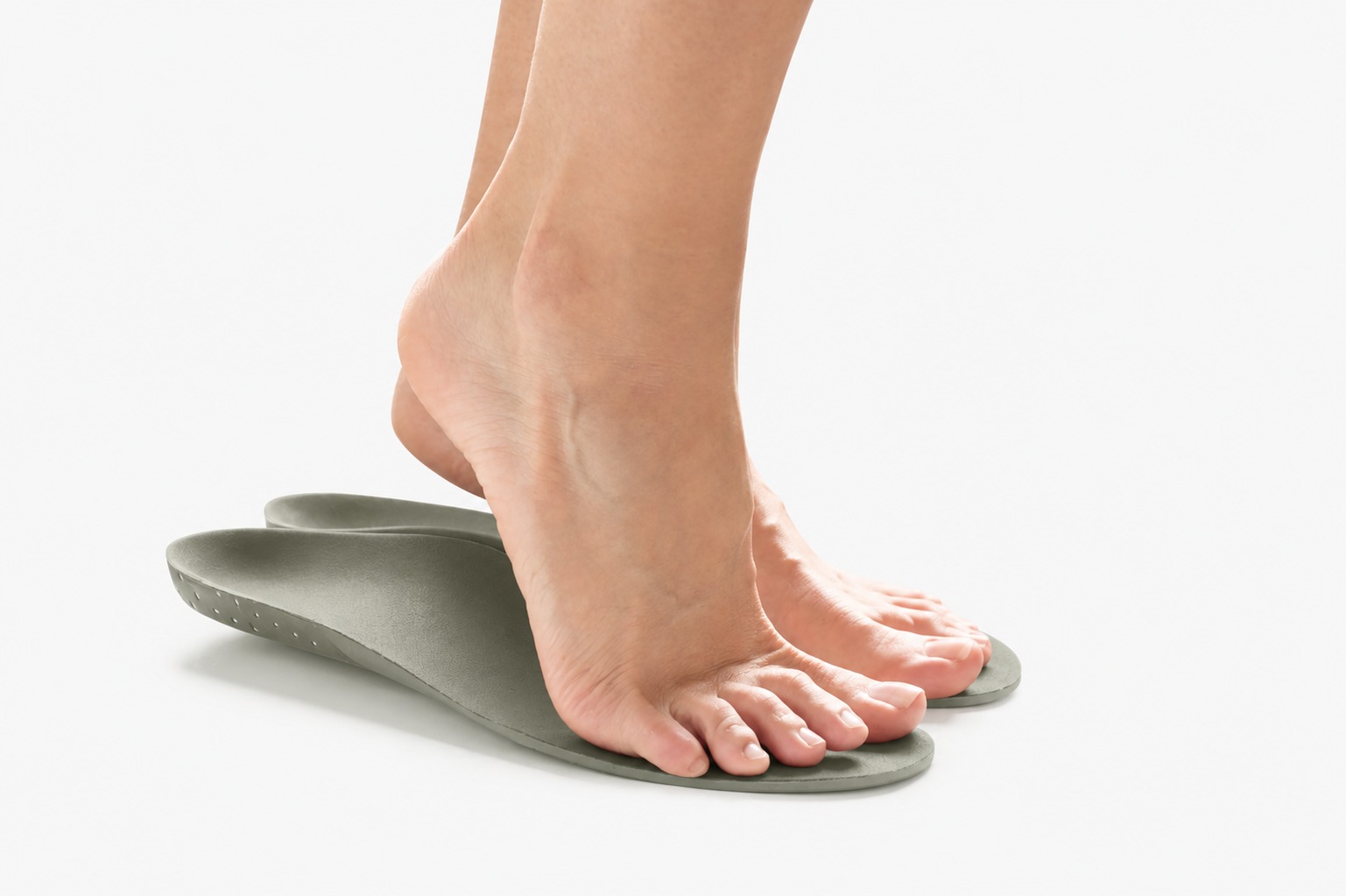
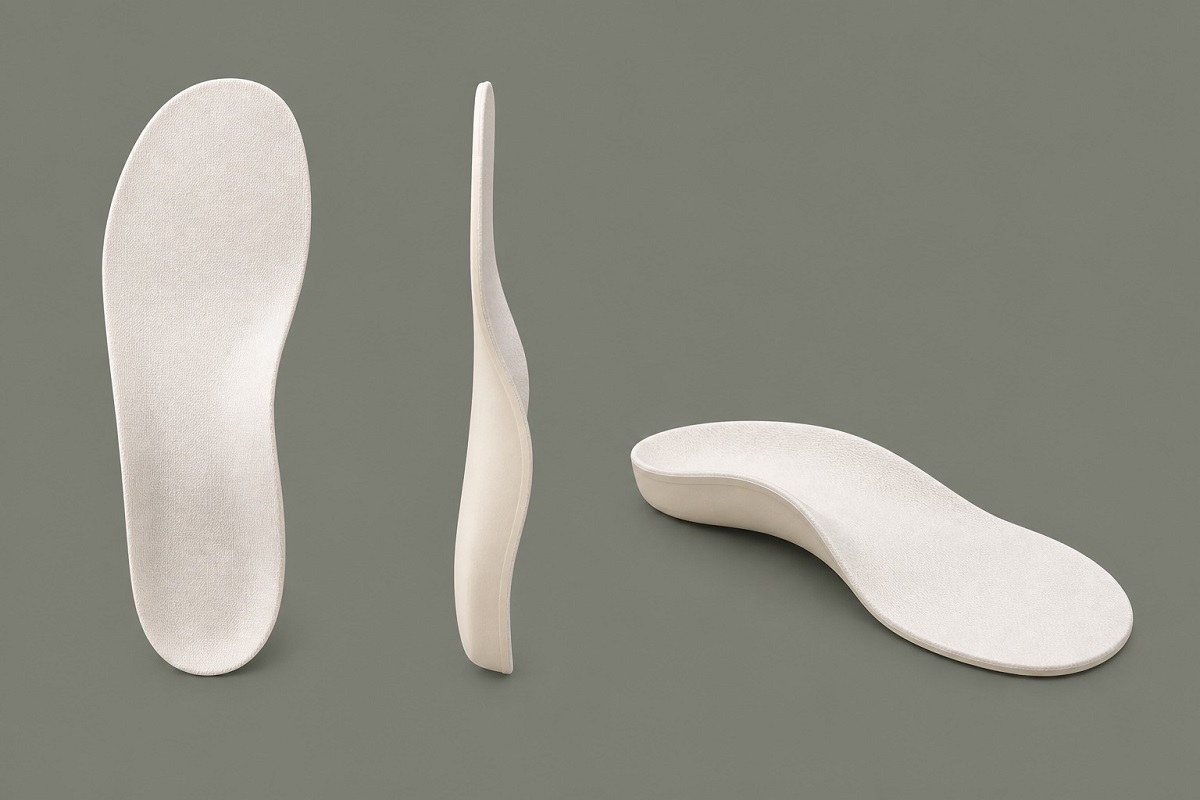
Clinically prescribed custom foot orthosis for flat feet and plantar fasciitis in Hong Kong

How to Decide Which Option Actually Fits Your Situation

Matching the comparison table above to a real decision: if your discomfort is mild, occasional, and not tied to a specific diagnosed condition, a pharmacy insert or an in-store moulded option is a reasonable place to start, and there’s no need to overspend on something you may not need. If you’ve already tried that route without real improvement, or your discomfort is recurring, worsening, or shows up alongside knee, hip, or back pain, that’s usually the point where a clinical assessment is worth the extra step rather than cycling through more off-the-shelf options.

A Hong Kong-Specific Consideration

Certain groups of people in Hong Kong carry more foot strain than others. Office workers on long commutes, teachers and retail staff who spend full shifts on their feet, and students carrying overweight school bags on growing feet all put repeated, cumulative load through the same structures. Hong Kong’s hard pavement and hilly terrain add to that. None of this means everyone in these groups needs custom orthotics, but it’s relevant context for why proper support matters more here than it might in a less foot-intensive daily routine.

How Agape Approaches Custom Orthotics

As a custom foot orthosis chiropractor provider in Hong Kong, Agape doesn’t treat orthotics as a standalone product you order off a form. Our assessment and prescription process starts with understanding how your foot, ankle, and the rest of your lower limb function together, since two people with similar-looking flat feet can have very different underlying mechanics.

Orthotics are also considered alongside the rest of your musculoskeletal picture rather than in isolation. If foot mechanics are contributing to knee, hip, or lower back discomfort, that connection gets factored into the treatment plan rather than treated as a separate issue to address later.

That’s consistent with how we approach every first visit at our clinic: assessment first, then a treatment plan built around what’s actually found, not a generic starting point.

常見問題

Can I just buy orthotic insoles at a pharmacy instead?

For mild, general discomfort, a pharmacy insole can provide some relief. For a specific, persistent, or worsening condition, a pharmacy insole isn’t built around your individual biomechanics, so it’s unlikely to address the underlying cause.

What about the “custom-moulded” insoles some shoe stores offer in 10 minutes — are those the same thing?

Not quite. In-store heat-moulded insoles match the shape of your foot for comfort, but they aren’t based on a clinical assessment of how your foot functions during movement. They can be a reasonable comfort upgrade, but they’re a different category from a clinically prescribed custom orthosis.

How long do custom foot orthotics last?

This varies by material and how often they’re worn, but custom orthoses are generally built from more durable materials than store-bought inserts and tend to hold their shape and function for considerably longer.

Do custom orthotics hurt at first?

Some mild awareness in the feet or legs during the first days of wear is common as your body adapts to the new loading pattern. Persistent pain beyond a short adjustment period usually means the fit needs to be reassessed.

Are custom orthotics covered by insurance in Hong Kong?

Coverage varies significantly between providers and plans. It’s best to confirm directly with your insurer before your visit, and clinics can usually provide documentation suitable for submitting a claim afterward.

What conditions can custom orthotics help with?

Custom orthotics are commonly used as part of managing flat feet, plantar fasciitis, high arches, and chronic heel pain, among other foot, ankle, and lower limb conditions.

Can children use custom orthotics?

Yes, in appropriate cases. Growing feet can benefit from proper support, particularly where gait or posture concerns are identified early, though the approach and materials used typically differ from those used for adults.

What’s the difference between orthotics and orthopaedic shoes?

Orthopaedic shoes are built with supportive features designed into the shoe itself. Orthotics are separate devices placed inside regular or supportive footwear. The two aren’t mutually exclusive, and orthotics are often worn inside orthopaedic or supportive shoes for additional benefit.

Not Sure Which One You Need?

If you’ve tried a shoe insert without much success, or you’re dealing with flat feet, heel pain, or discomfort that keeps coming back, an assessment is a more reliable starting point than another trip to the pharmacy aisle. If you’re specifically looking into custom insoles for flat feet, you can read more about our approach to flat feet, or reach us directly at 2777 3377 to 預約評估. at Unit A, 8/F, World Trust Tower, 50 Stanley Street, Central.

Our Related Posts

如果您從未看過脊醫,對未知流程的擔憂,往往比治療本身更令人卻步。

Wrist pain can originate from a multitude of

If you spend long hours working at a

The trapezius muscle is known as one of

Introduction Rib pain is a common symptom that

The patellofemoral joint refers to the space between

Do you experience constant aching, sharp pain, or

Radiculopathy can lead to numbness, pain, and tingling

The pain from myofascial pain syndrome may persist

In this digital age, a lot of people

Many patients experience knee pain, in fact it

An ankle ligament injury can affect your daily

Foot and ankle pain is a common musculoskeletal

You may notice a jelly-like bump on your

People of all ages—from office workers and athletes

If you are reading this blog, you might

Many people experience calf muscle pain. It may

Shoulder pain affects a lot of people and

Many people struggle with frozen shoulder, realizing how

Many of you may struggle with neck stiffness,

Many people experience chronic back pain and stiffness.

A buffalo hump, or dorsocervical fat pad, is

Thoracic Outlet Syndrome (TOS) can cause pain, tingling,

Bone spurs, also called osteophytes, are bony growths

Carpal Tunnel Syndrome (CTS) affects the wrist and

Frozen shoulder, also called adhesive capsulitis, is a